Introduction
With rapid urbanization, increasing traffic congestion, and continuous infrastructure development comes a strong growth for the out-of-home (OOH) advertising industry. As more Filipinos spend hours every day navigating congested roads and public transportation systems, advertisers gain more opportunities to reach a wider set of audiences.
Among the many OOH formats, transit advertising has emerged as one of the most effective channels for consistent brand exposure. Bus advertising in the Philippines, in particular, has become very popular among advertisers due to buses’ extensive route coverage, high visibility, and exposure to commuters, pedestrians, and motorists alike.
As the competition increases, advertisers must adopt a more strategic approach to ensure that their bus ads deliver outstanding results. In this article, we will discuss how you can maximize the effectiveness of your bus campaigns and how Outcomm can help you achieve measurable results.
5 Tips To Ensure Effective Bus Advertising Campaigns in the Philippines
Successful bus advertising in the Philippines is built on creativity, strategy, and commuter insights. Below are five practical tips to help you improve your campaign performance and ensure that you can yield strong returns.
Study Your Captive Audience
One of the greatest advantages of ads on buses is access to a captive audience. Commuters spend long periods waiting at terminals or sitting inside a bus while stuck in traffic, exposing them to ads for an extended amount of time. To take advantage of this, brands must first understand who their audience is and how they consume information.
In the Philippines, bus commuters often include office workers, students, and daily wage earners. Each of them has distinct schedules, preferences, and purchasing habits. For example, routes passing through central business districts tend to reach professionals, while intercity or long-distance routes reach families or leisure travellers.
By taking factors such as demographics, travel times, and peak hours into consideration, you can effectively tailor your bus ad to resonate with your target audience.
Sharpen Your Messaging
There are three main things to keep in mind when crafting messaging bus advertising in the Philippines: clarity, brevity, and creativity. With bus wrap advertising, for example, where buses serve as a moving billboard, pedestrians are often exposed to messages for only a few seconds when buses pass by. This is why it is crucial to communicate your key messages quickly and effectively.
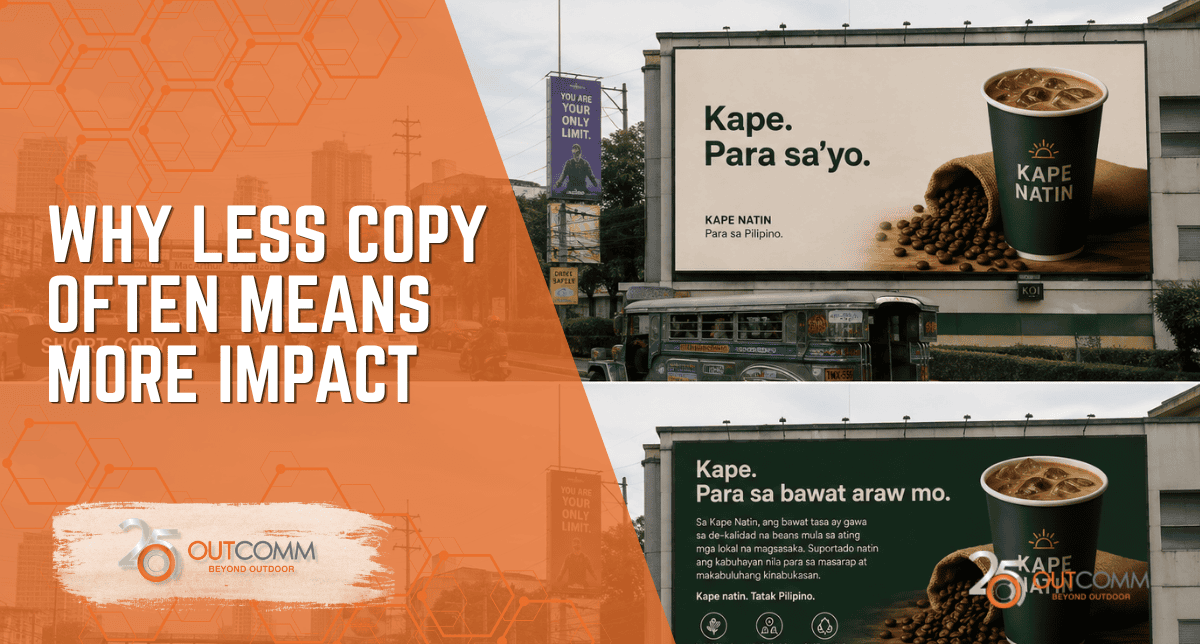
Designs with overwhelming visuals, excessive texts, or multiple call-to-action statements can dilute impact and reduce brand recall. On the other hand, a strong bus ad focuses on a single core message, supported by bold visuals and concise copy that can be easily seen and understood at first glance.
Leverage Digital Technology
Advancements in transit advertising have expanded the possibilities for advertisers to engage with consumers. In buses, digital ads installed in the interior or exterior part of the vehicle allow advertisers to rotate content, deliver time-specific messages, and integrate dynamic visuals that capture more attention than static formats.
Incorporating digital elements into bus advertising in the Philippines enables you to customize your messaging based on location, time of day, or target demographic. Moreover, it opens opportunities for you to put engaging elements on your ad that convert to sales, such as QR codes, social media prompts, and purchase links, among others.
Consider the Welfare of Commuters
Effective bus advertising goes beyond visibility. Ads on buses that obstruct views, create visual clutter, or interfere with safety can lead to negative brand perceptions and regulatory issues.
When utilizing bus advertising in the Philippines, it is important to ensure that ads are readable without causing discomfort or distraction. Exterior ads like bus wraps, for example, must follow safety regulations mandated by the Land Transportation Franchising and Regulatory Board (LTFRB), including:
- Transit ads shall not constitute a traffic hazard, nor compromise the safety, comfort, and convenience of passengers or the public.
- All advertising matters to be installed shall conform to the standards relative to morality, decency, and public safety in accordance with the Advertising Code of Standards.
- PUV identification and operational information (company and/or trade name, license plate, body number, LTFRB hotline, etc.) must not be hindered.
- Company or trade name marking on the sides of the bus shall be at no less than eight inches in height.
- PUV identification, operational information, and other mandatory markings at the back of the bus must be painted on top of a white background on the lower portion of the back of the bus.
Following these safety measures demonstrates your consideration for commuter comfort and safety, which in turn, reinforce positive perception of your brand.
Choose Relevant Inventories
Placement plays a crucial role in determining the success of any bus advertising campaign. Even the most visually striking bus ads can underperform if they are not positioned in locations that align with your campaign goals and target audience. This is where choosing a relevant inventory becomes highly valuable.
For example, advertising in BGC buses is ideal if your target audience is business professionals, luxury product consumers, city living enthusiasts, or leisure lovers. Meanwhile, buses traversing areas such as EDSA cater to a more general audience with diverse interests.
By choosing an inventory that matches your audience, messaging, and goals, you can be sure that your campaigns achieve stronger recall, better reach, and even greater returns.
Reach Bus Commuters Passing Through Multiple Routes With Outcomm
When it comes to bus advertising in the Philippines, working with an experienced OOH partner makes a significant difference. Outcomm, Inc. offers not only a top-notch bus ad inventory but also a strong understanding of commuter behavior and preferences and creative solutions to make your ads stand out.
Our BGC Bus inventory ensures that your ads are seen in key business areas, such as RCBC, Net One, The Globe Tower, Bonifacio Stopover, Crescent Park West, One University Parkway, Parkade, Fort Victoria, and Market! Market! Terminal. With an ad placement on this network of buses, you can get more opportunities for a bigger return on investment.
Conclusion
Bus advertising proves to be a dynamic and effective channel for advertisers who want massive reach without spending big. As millions of Filipinos navigate the country’s busy roads, bus advertising in the Philippines offers brands an opportunity to connect with audiences on a daily basis.
Let your bus ads be seen with Outcomm. Reach out to us today to learn more.