The term Out-of-Home (OOH) Advertising is strange to the common public as it mostly revolves around business-to-business conversations. After all, it’s the brands and businesses that need advertising – whether physical or digital form. Although OOH is not difficult to understand at all, there are still common misconceptions that make brands shy away from it. In this article, we’re going to debunk common OOH misconceptions and replace it with research-based facts from online discussions of outdoor advertising thought leaders.
A common notion is equating billboards to luxury. When a brand has tons of billboards around the metro, or even just one huge billboard, they’re considered “BIG”. They probably earn much to spend on outdoor advertising as billboards are considered costly. But that’s a misconception – leading us to our first point:
#1 OOH is just for BIG brands
Sure, high-impact placements and popular locations can be expensive, but its price can vary depending on its size, location, and campaign objectives. OOH is also cost-efficient compared to other media channels, especially if you’re eyeing to target a large network of audiences. Think about being visible in highways or commute routes where people flock during peak hours. With outdoor ads, your brand can even follow them even on off-peak hours.
Vistar Media, a media company in New York, says that outdoor advertising has the ability to place ads on several premium locations, reaching more people rather than just securing a spot on a high-profile screen. This strategy sustains a brand’s visibility and reinforce recall without high production costs. Additionally, OOH can still catch people’s attention as it comes in different types.
#2 Billboards are the only type of OOH advertising
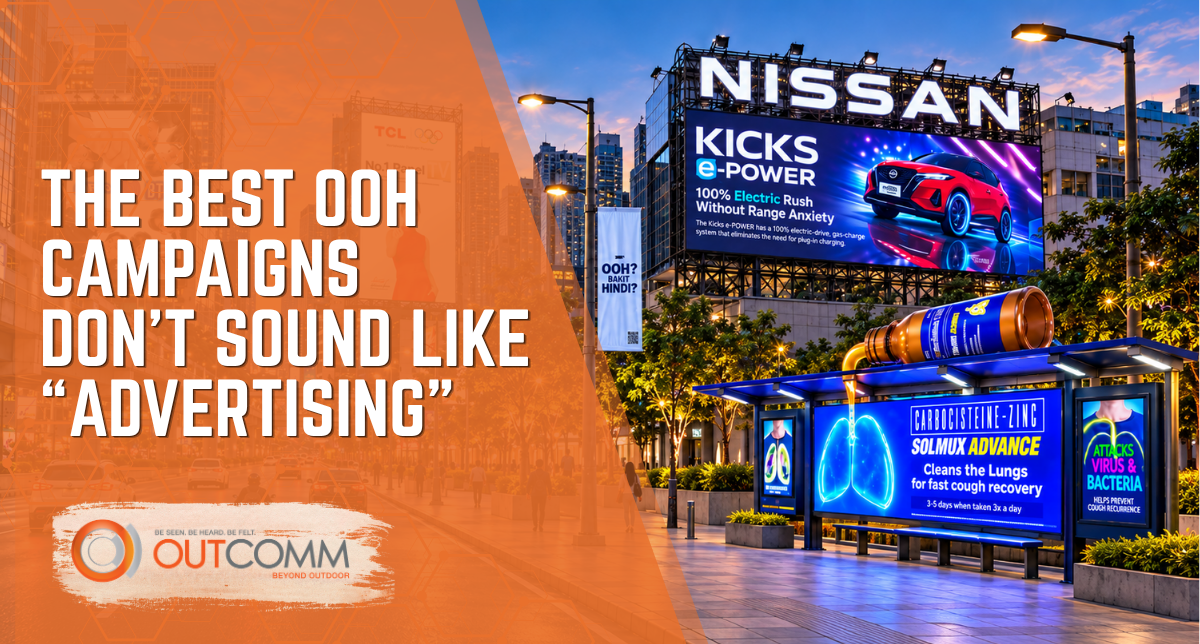
Billboards are the most common type of OOH. In fact, the most basic way to remember what OOH is, is equating it to “billboards”. However, as society modernizes, things get more creative than ever. Currently, outdoor advertising has the ability to give colors to simple bus sheds, waiting benches, sidewalk posters, transportation, or even a roof deck! This is another big reason to invest in OOH as consumers nowadays are always on the look out for “something new”, rather than the traditional posters.
It’s still important to note that large screens and billboard structures stay as headturners, but they don’t automatically mean stronger results.
#3 The bigger the billboard, the stronger the results
Let’s get it straight: there are many factors to be considered for an ad campaign to be “strong”. According to the Out of Home Advertising Association of America (OAAA), campaign effectiveness depends on location, creatives, campaign objectives, and viewing distance, rather than just depending solely on “size”. Going big is smart, but going strategic is smarter.
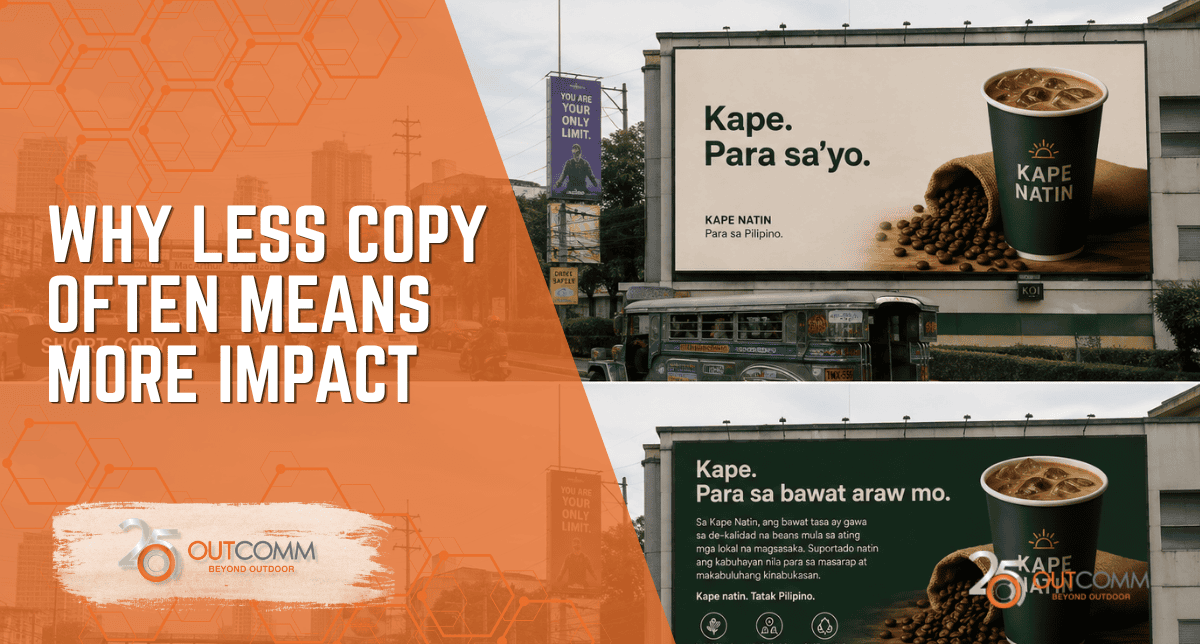
For brands to stand out, it’s not about having the biggest LED screen or billboard placement, but about having a larger impact that actually connects their brand to the audience.
#4 Digital marketing has replaced OOH
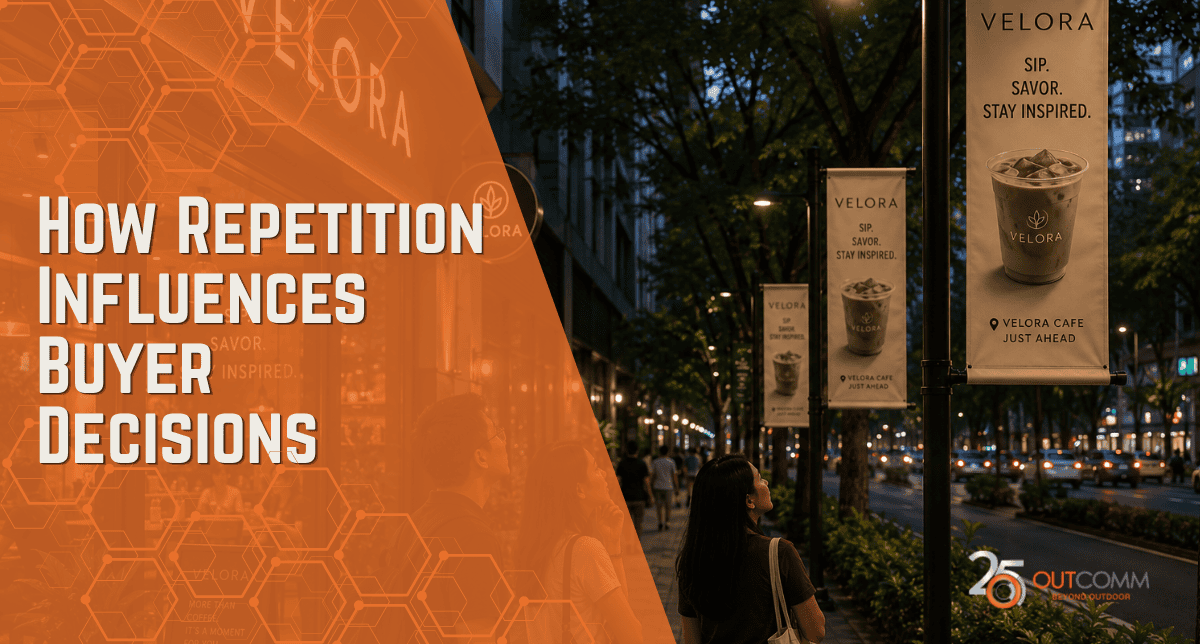
Instead of contending both platforms, it’s strategic to make them work together. Brands stay memorable when they are seen in the physical world and still repeated in the virtual one. World Advertising Research Center, a global authority and knowledge platform for marketing effectiveness, found that OOH complements online activation. The strategy produces stronger results compared to others that treat them as separate channels. Brands can put QR codes to OOH platforms that lead consumers to visit their website or download their app.
Key Takeaway
Above all, we can say that OOH is still a good investment even in a time when it seems like everyone’s switching to digital marketing. As the world adopts virtually, it still matters what people experience in real time in the physical world.
Need help in campaigns? Contact us for a FREE ads consultation!