Advertising has become easy to recognize, but some of its forms are easier to ignore. We see sponsored posts between the content we actually want to consume, skip ads before videos, scroll past promotional content, and move on from messages that feel too much like they are trying to sell us something.
However, in the context of Out-of-Home (OOH) advertising, it does not have to interrupt a piece of content to get attention, because it is already part of the environment. People encounter it while driving, commuting, walking, shopping, or simply going about their day. This gives brands an opportunity to do something beyond putting a sales message on a large surface – creating something that feels relevant to the place, moment, and the people seeing it.
Effective OOH campaigns are advertising in disguise
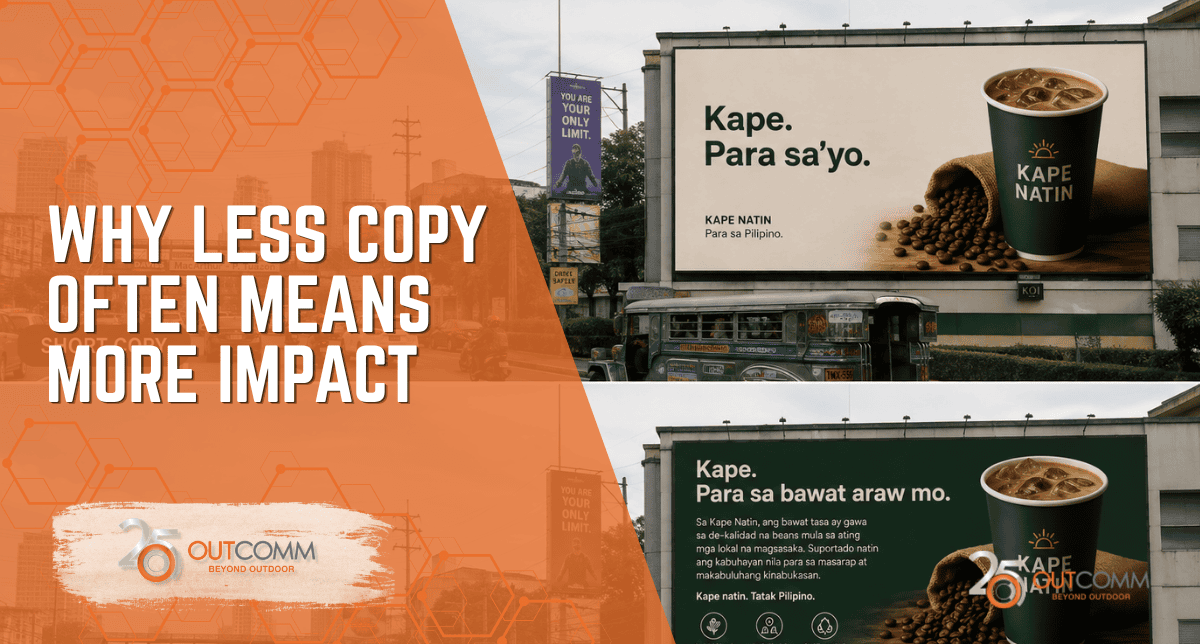
Effective OOH campaigns might be funny, unexpected, clever, visually interesting, or connected to something happening around them. Instead of simply telling people about a product or promotion, they give people a reason to look – that distinction matters because attention is the first challenge any OOH campaign has to address.
Research from System1 and JCDecaux’s 2025 Double Take study, which analyzed more than 1,000 OOH campaigns and gathered responses from more than 180,000 consumers across seven markets, found that stronger creative quality was associated with better commercial outcomes. The research particularly highlighted the role of emotional engagement and branding in making OOH creative more effective.
It gives people the feels… moreso, the experience
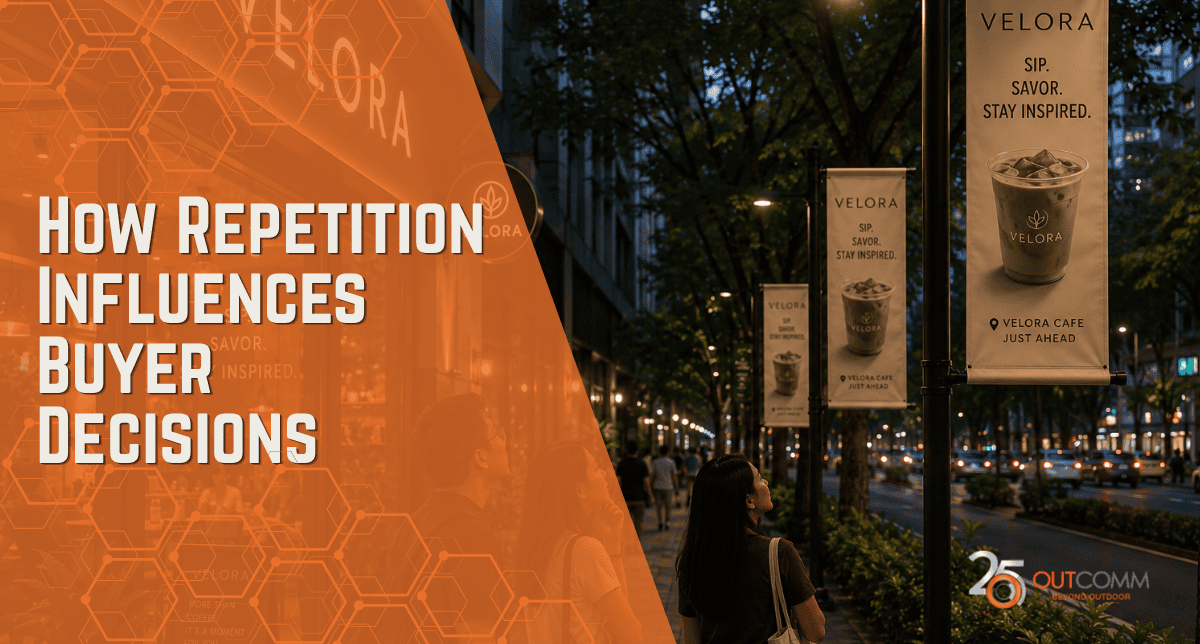
The physical nature of OOH also gives brands something that other media cannot always replicate: context. A billboard on a busy highway is experienced differently from an ad inside a shopping mall. A bus wrap is seen while the audience is commuting, while a street furniture placement can become part of someone’s daily route. An LED display can use movement and timing in ways that a static billboard cannot. When brands understand these differences, the location and format stop being just a place to put an advertisement and start becoming part of the creative idea itself.
There is evidence that this kind of contextual thinking can make a difference. JCDecaux’s Moments of Truth research found that contextually relevant DOOH content can improve audience effectiveness, with its research reporting an average 17% increase in overall audience effectiveness for contextually relevant content. A message that acknowledges where someone is or what is happening around them can feel more natural than a generic advertisement that could have been placed anywhere.
In the end, it’s still YOUR brand identity
That does not mean that brands should remove “advertising” from their advertising. In fact, branding remains important. The same System1 and JCDecaux research found that well-branded OOH campaigns were more than 50% more likely to be recalled, while recognizable brand assets such as colors, characters, and tone were associated with stronger recall.
The challenge, then, is not to make an advertisement so subtle that people forget which brand they saw. It is to make the brand feel like a natural part of the idea.
This is where creativity becomes particularly important. A good OOH campaign can use the medium itself to communicate something about the brand. A food brand might use a billboard’s location to reference nearby restaurants. A brand activation might transform an ordinary space into something people want to photograph. These approaches work because the audience is not simply being told something about the brand; they are experiencing the brand through the medium.
Key Takeaway
This does not mean every OOH campaign needs to be funny, interactive, or designed to go viral. Not every brand needs a spectacular special execution because ultimately, the best OOH campaigns focus on being valuable, rather than being extravagant only. When a campaign fits its environment, communicates quickly, uses recognizable brand cues, and gives people something worth noticing, it has a better chance of becoming part of the experience rather than simply another advertisement along the road.
We can work in making your brand advertising valuable! Send us a message at sales@outcomm.ph or call +63 02 8 856 6710 to start.